
Internal linking has always been a cornerstone of SEO strategy, but in the era of Generative Engine Optimization (GEO), its role has evolved dramatically. AI search engines like ChatGPT, Google AI Overview, Perplexity, and Claude don’t just crawl individual pages — they evaluate the interconnected knowledge structure of your entire domain to determine topical authority and citation worthiness.
This guide explores how internal linking strategies must adapt for GEO, why AI engines interpret link structures differently than traditional crawlers, and how to build an internal linking architecture that maximizes your chances of being cited across all major AI search platforms.
Why Internal Linking Matters More for GEO Than Traditional SEO
In traditional SEO, internal links primarily serve three purposes: distributing PageRank, helping crawlers discover pages, and providing navigational context for users. While these functions remain important, AI search engines add entirely new dimensions to how internal links are evaluated.
How AI Engines Interpret Internal Links
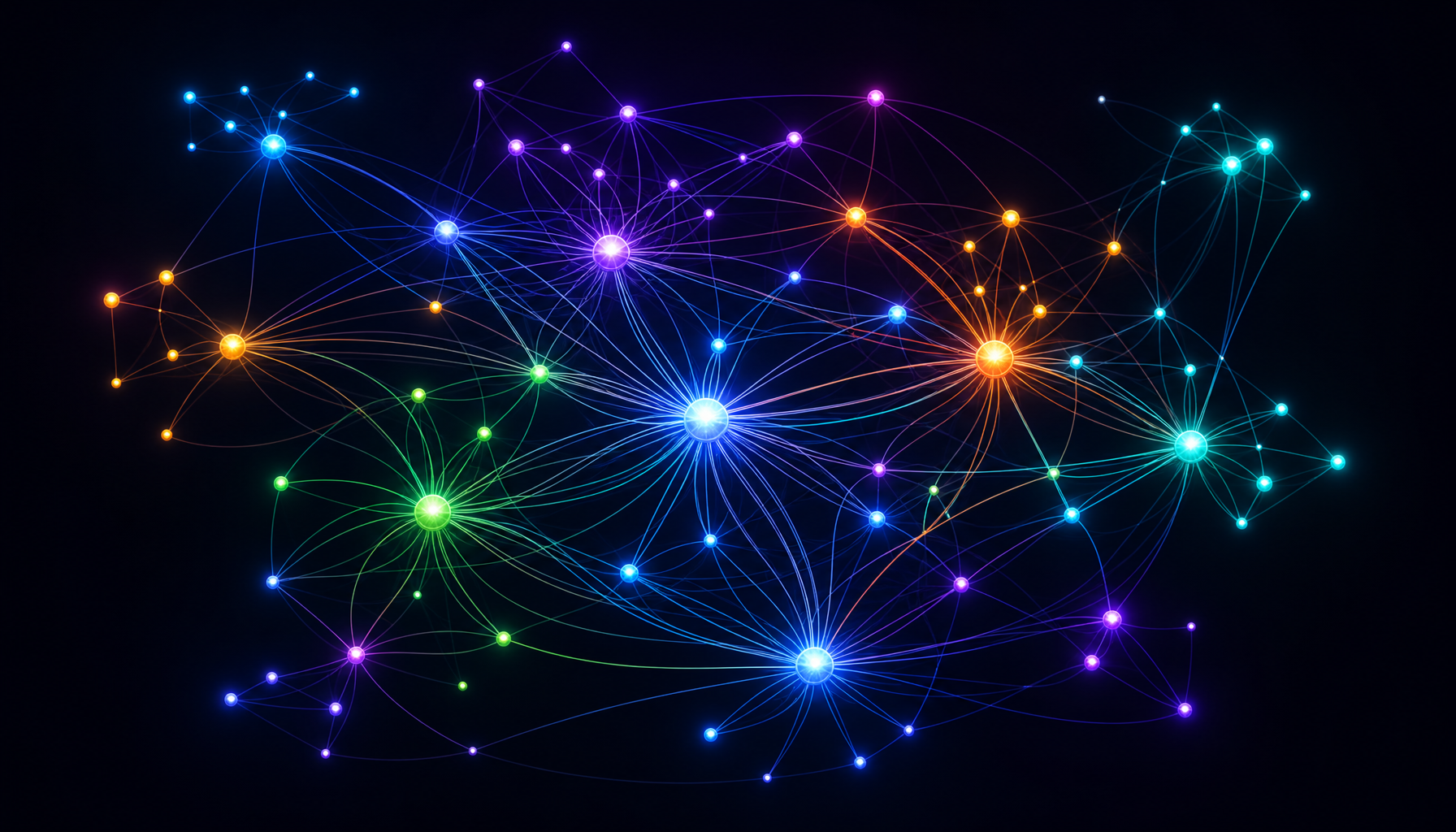
AI search engines process internal linking structures as knowledge graphs rather than simple directional signals. When an AI engine crawls your site, it builds a semantic map of how your content relates to itself. This map reveals:
- Topical depth: How many interconnected pages cover different aspects of a subject
- Knowledge completeness: Whether your site addresses a topic comprehensively or has gaps
- Information hierarchy: Which pages serve as authoritative hubs versus supporting content
- Content relationships: How concepts connect and build upon each other
- Expertise signals: Whether your linking patterns suggest genuine expertise or superficial coverage
This means that a well-structured internal linking strategy doesn’t just help individual pages rank — it signals to AI engines that your entire domain possesses the depth and authority needed to be a reliable citation source.
The Topical Authority Connection
AI engines are particularly sensitive to topical authority signals. A domain that has 50 well-interlinked pages covering different aspects of “content marketing” will be perceived as more authoritative on that topic than a domain with 5 isolated pages, even if those 5 pages are individually excellent.
Internal links are the mechanism through which you demonstrate this topical depth to AI systems. Each link between related pages reinforces the message: “This domain has comprehensive knowledge about this subject.”

The Hub-and-Spoke Model for GEO
The most effective internal linking architecture for GEO follows a hub-and-spoke model, where pillar pages (hubs) connect to multiple supporting pages (spokes) that cover specific subtopics in depth.
Building Effective Content Hubs
A content hub for GEO purposes should:
- Serve as a comprehensive overview of a broad topic (2,500-4,000 words)
- Link to 8-15 supporting pages that cover specific subtopics
- Receive links back from each supporting page
- Include a clear table of contents or topic navigation
- Be regularly updated as new supporting content is published
- Target broad, high-volume queries that AI engines frequently answer
Designing Supporting Spoke Pages
Each spoke page should:
- Cover a specific subtopic in comprehensive depth (1,500-3,000 words)
- Link back to the hub page with contextual anchor text
- Cross-link to 2-4 other relevant spoke pages
- Target specific long-tail queries within the broader topic
- Provide unique data, examples, or insights not found in the hub
- Include clear signals about its relationship to the broader topic
Example Hub-and-Spoke Structure
Consider a GEO-focused content hub:
Hub page: “The Complete Guide to Generative Engine Optimization”
Spoke pages:
- How to optimize for ChatGPT citations
- Google AI Overview ranking factors
- Schema markup for AI visibility
- Content structure patterns for AI engines
- Measuring AI search visibility
- E-E-A-T signals for generative search
- Building topical authority for AI citations
Each spoke links back to the hub and cross-links to 2-3 other spokes where contextually relevant. This creates a dense knowledge network that AI engines recognize as comprehensive topical coverage.

Anchor Text Strategy for AI Engines
Anchor text — the clickable text of a hyperlink — carries significant semantic weight for AI engines. Unlike traditional SEO where exact-match anchor text could trigger over-optimization penalties, AI engines use anchor text as a contextual signal to understand content relationships.
Best Practices for GEO Anchor Text
Use descriptive, natural phrases: Instead of “click here” or naked URLs, use anchor text that describes what the linked page covers. For example: “our detailed guide to measuring your GEO score” tells the AI exactly what to expect from the linked page.
Vary anchor text naturally: Link to the same page using different but related phrases throughout your content. This helps AI engines understand the full scope of what the linked page covers.
Include contextual sentences: The sentences surrounding your internal links provide additional context. AI engines read the full paragraph to understand the relationship between the linking page and the linked page.
Match user intent language: Use anchor text that mirrors how users would phrase questions about the linked topic. This helps AI engines connect user queries to your content through your link structure.
Anchor Text Patterns to Avoid
- Generic anchors like “read more,” “click here,” or “this article”
- Overly keyword-stuffed anchors that feel unnatural
- Identical anchor text for every link to the same page
- Anchors that don’t accurately describe the linked content
- Very long anchor text (more than 6-8 words) that dilutes the signal

Contextual Linking: The GEO Advantage
Contextual links — links placed within the body content where they naturally support the reader’s journey — are the most valuable type of internal link for GEO purposes. AI engines weight contextual links more heavily than navigational links because they indicate genuine content relationships.
When to Place Contextual Links
The ideal placement for contextual internal links follows these principles:
- At the point of curiosity: Link when you mention a concept that the reader might want to explore further
- After establishing context: Provide enough information about a subtopic to demonstrate relevance, then link to the deeper resource
- Within supporting evidence: When citing data or methodology from another page on your site, link to it
- At decision points: When readers might need additional information to take action, link to relevant resources
Link Density Guidelines
For GEO optimization, aim for:
- 3-5 contextual internal links per 1,000 words of content
- At least one link in the introduction pointing to your most authoritative related page
- Links distributed throughout the content, not clustered in one section
- A mix of links to hub pages and specific supporting content
- No more than one internal link per paragraph to maintain readability
Navigation and Structural Links
While contextual links carry the most semantic weight, structural links (navigation menus, sidebars, footers, breadcrumbs) still play an important role in GEO by establishing your site’s information architecture.
Breadcrumb Navigation
Breadcrumbs serve dual purposes for GEO: they help AI engines understand your content hierarchy, and they provide structured data signals when implemented with BreadcrumbList schema. Every content page should include breadcrumb navigation that reflects its position within your topic clusters.
Related Content Sections
Adding “Related Articles” or “Further Reading” sections at the end of posts provides additional linking opportunities. For GEO, these sections should be curated (not randomly generated) and include brief descriptions of why each linked page is relevant.
Topic Navigation Widgets
For content hubs, include a visible topic navigation element that links to all spoke pages. This helps both users and AI engines understand the full scope of your topical coverage.

Internal Linking Audit for GEO
Conducting a GEO-focused internal linking audit helps identify gaps and opportunities in your current structure. Here’s a systematic approach:
Step 1: Map Your Current Link Structure
Use a crawling tool to map all internal links on your site. Identify:
- Pages with the most inbound internal links (your current hubs)
- Orphan pages with zero or minimal internal links
- Pages that link out heavily but receive few links back
- Broken internal links that disrupt your knowledge graph
Step 2: Identify Topic Clusters
Group your content into topic clusters based on subject matter. For each cluster, determine:
- Which page should serve as the hub (most comprehensive, highest authority)
- Which pages are natural spokes (specific subtopics)
- Where cross-cluster links make sense
- What content gaps exist within each cluster
Step 3: Evaluate Link Context Quality
Review the context surrounding your internal links:
- Are anchor texts descriptive and varied?
- Do surrounding sentences provide semantic context?
- Are links placed at natural points in the content flow?
- Do links connect genuinely related content?
Step 4: Check for GEO-Specific Issues
Look for problems that specifically impact AI engine interpretation:
- JavaScript-rendered links that AI crawlers might miss
- Links hidden behind user interactions (tabs, accordions)
- Excessive nofollow tags on internal links
- Redirect chains between internally linked pages
- Inconsistent URL structures that fragment link equity
Step 5: Implement and Monitor
After making changes, use the Openbyt GEO Score Analyzer to measure the impact on your content’s AI visibility scores. Track changes in citation rates across AI engines over the following a variable recrawl window.

Advanced Internal Linking Techniques for GEO
Semantic Silos
Organize your content into semantic silos — tightly themed groups of pages that link primarily within their silo while maintaining strategic cross-silo connections. This creates clear topical boundaries that help AI engines understand your areas of expertise.
A semantic silo structure:
- Groups 10-30 pages around a core topic
- Maintains dense internal linking within the silo (every page links to 3-5 others in the same silo)
- Connects to other silos through 2-3 strategic bridge pages
- Has a clear pillar page that serves as the silo’s entry point
Progressive Depth Linking
Structure your links to guide both users and AI engines from broad overviews to specific details. Your hub pages should link to intermediate-depth pages, which in turn link to highly specific, detailed content. This creates a natural information hierarchy that AI engines can traverse.
Recency-Based Link Updates
When you publish new content, systematically update older related pages to link to the new content. This serves multiple GEO purposes:
- Signals to AI engines that your older content is maintained and current
- Distributes authority to new pages faster
- Strengthens the overall topic cluster
- Triggers re-crawling of updated pages
Entity-Based Linking
Link between pages that discuss the same entities (people, organizations, concepts, tools) even if they’re in different topic clusters. AI engines build entity graphs, and your internal links help them understand which entities your domain has expertise about.
Measuring Internal Linking Impact on GEO Performance
Track these metrics to understand how your internal linking strategy affects AI citation rates:
Key Performance Indicators
- Citation rate by cluster: Track AI citations for pages within each topic cluster to see which clusters have the strongest internal linking
- Hub page citation frequency: Monitor how often your pillar pages get cited versus spoke pages
- New page citation speed: Measure how quickly new pages start receiving AI citations (well-linked pages should be cited faster)
- Cross-engine consistency: Check whether your linking structure benefits citations across all AI engines equally
Tools for Monitoring
Use a combination of:
- The Openbyt GEO Score to evaluate individual page optimization
- Crawling tools to visualize your internal link graph
- AI search monitoring tools to track citation appearances
- Google Search Console for traditional organic performance correlation

Common Internal Linking Mistakes That Hurt GEO
Mistake 1: Flat Link Architecture
Linking every page to every other page without hierarchy creates noise rather than signal. AI engines need clear structure to understand which pages are most authoritative on which topics.
Mistake 2: Orphaned Content
Pages with no internal links pointing to them are essentially invisible to AI engines’ topical authority calculations. Every page should receive at least 2-3 contextual internal links from related content.
Mistake 3: Over-Linking to Commercial Pages
Excessively linking to product or pricing pages from informational content can signal commercial intent over informational authority. Balance commercial links with links to other informational resources.
Mistake 4: Ignoring Link Context
Placing links without surrounding contextual text wastes the semantic signal opportunity. Always ensure the paragraph containing a link provides context about why the linked resource is relevant.
Mistake 5: Static Link Structures
Never updating your internal links as new content is published means your link graph becomes stale. Implement a regular process for adding links from existing content to new publications.
Frequently Asked Questions
How many internal links should each page have for optimal GEO performance?
For a typical 2,000-3,000 word article, aim for 8-15 contextual internal links plus navigational links. Hub pages can have more (15-25) since they serve as navigation points for entire topic clusters. The key is that every link should be contextually relevant — never add links just to hit a number. Quality and relevance matter more than quantity for AI engine interpretation.
Should I use nofollow on any internal links for GEO purposes?
Generally, no. Unlike external links where nofollow might be appropriate, internal links should flow freely to distribute authority throughout your site. Using nofollow on internal links prevents AI engines from following those paths when building their understanding of your site’s knowledge structure. The only exception might be links to login pages or other non-content pages that don’t contribute to topical authority.
How quickly do internal linking changes impact AI citations?
Internal linking changes typically take 2-6 weeks to fully impact AI citation rates. AI engines need to re-crawl the modified pages, re-process the updated link graph, and recalculate topical authority scores. You may see faster results (a variable recrawl window) for pages that are already crawled frequently, and slower results (a variable recrawl window) for deeper pages with less crawl frequency.
Do AI engines follow JavaScript-rendered internal links?
Most AI engines can process JavaScript-rendered content, but there’s evidence that links present in the initial HTML are weighted more heavily and discovered more reliably. For critical internal links that support your GEO strategy, ensure they’re present in the server-rendered HTML rather than relying solely on client-side JavaScript rendering.
Is there a difference between how Google AI Overview and Perplexity interpret internal links?
Yes. Google AI Overview benefits from your existing Google organic rankings, so internal links that boost traditional SEO also help AI Overview citations. Perplexity appears to evaluate topical authority more independently, placing greater emphasis on content depth and freshness signals. Both benefit from clear hub-and-spoke structures, but Perplexity may give more weight to recently updated link structures.
Build Your GEO-Optimized Link Structure Today
Internal linking for GEO isn’t just about connecting pages — it’s about building a knowledge architecture that demonstrates your domain’s expertise to AI engines. By implementing hub-and-spoke structures, using descriptive anchor text, maintaining contextual link placement, and regularly auditing your link graph, you create the foundation for consistent AI citations across all major generative search platforms.
The investment in proper internal linking compounds over time. Each new page you publish strengthens your existing topic clusters, and each link you add reinforces your domain’s topical authority signals.
Want to see how your content’s structure and linking affect its AI visibility? Use the free Openbyt GEO Score Analyzer to evaluate your pages across 9 dimensions that matter for AI engine citations. Get specific, actionable recommendations for improving your content’s citation potential — 3 free analyses per day, no credit card required.
For teams managing larger sites, our Pro ($19/mo) and Agency ($49/mo) plans offer higher-volume analysis to audit your entire internal linking structure systematically.