
One of the most debated questions in content strategy for AI search is whether AI engines prefer long-form or short-form content. The answer is more nuanced than either camp suggests. AI engines like ChatGPT, Perplexity, Google AI Overview, and Claude do not have a simple word-count threshold that determines citation eligibility. Instead, they evaluate content along dimensions that correlate with length in complex ways: comprehensiveness, factual density, passage extractability, and topical authority.
This guide presents what we know about how content length interacts with AI citation rates in 2026. We will examine the data, break down the mechanisms, identify the scenarios where each format wins, and provide a practical framework for deciding the right length for any given piece of content. If you are making editorial decisions about content investment, this analysis will help you allocate resources where they generate the most AI visibility.

The Core Question: Does Length Predict AI Citations?
Let us start with the data. Across multiple analyses of AI engine citation patterns, a consistent but imperfect correlation emerges between content length and citation frequency:
- Articles between 1,500 and 3,500 words receive the highest citation rates for informational queries across Perplexity, ChatGPT, and Google AI Overview.
- Articles under 800 words are cited significantly less often, except for highly specific technical queries where a focused answer outperforms broader coverage.
- Articles over 5,000 words do not see additional citation benefits compared to the 1,500 to 3,500 range, and in some cases perform slightly worse due to diluted relevance density.
However, correlation is not causation. Longer articles tend to be more comprehensive, contain more facts, cover more subtopics, and include more structured elements. These qualities, not length itself, drive citations. A 3,000-word article padded with filler performs worse than a 1,200-word article packed with specific, well-structured information.
The real question is not “how long should my content be?” but “how much depth does this topic require to be the best available source for AI engines?”
How AI Engines Process Content of Different Lengths
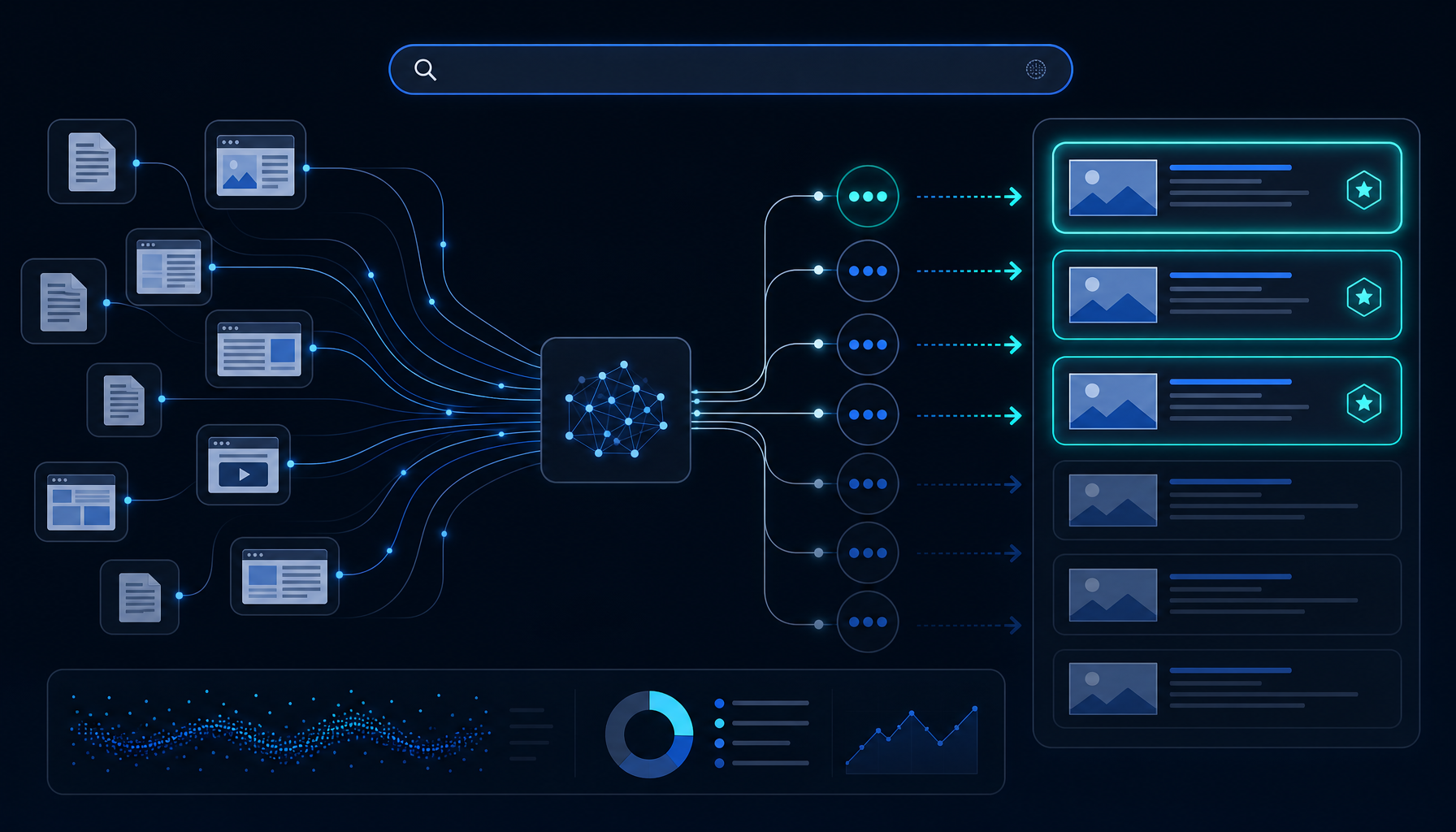
Understanding why length matters requires understanding how AI engines process content. The pipeline works in stages, and length affects each stage differently.
Stage 1: Retrieval
At the retrieval stage, AI engines identify candidate documents that might answer the user’s query. Length has minimal direct impact here. Both short and long documents can be retrieved if they match the query semantically. However, longer documents tend to match more queries because they cover more subtopics and contain more semantic surface area.
A 3,000-word guide on “email marketing automation” might be retrieved for dozens of related queries: “best email automation tools,” “how to set up drip campaigns,” “email marketing ROI benchmarks,” and so on. A 500-word post on the same topic might only match one or two of those queries.
Stage 2: Passage Extraction
After retrieval, AI engines extract specific passages from each document. This is where the relationship between length and quality becomes critical. The engine does not cite the whole document; it cites the specific passage that best answers the user’s question.
Longer documents offer more passages to extract from, which increases the probability that at least one passage will be highly relevant to any given query. But this only works if the document is well-structured with clear sections. A 4,000-word wall of text with no headings or logical breaks is harder to extract from than a 1,500-word article with clear H2 sections.
Stage 3: Re-ranking and Citation
At the final stage, extracted passages are ranked against each other. Here, quality per passage matters more than total document length. A short, focused article with one perfect passage can beat a long article with many mediocre passages.
The key insight: length creates more opportunities for citation, but only if each section maintains high quality. Length without quality is counterproductive.
When Long-Form Content Wins

Long-form content (1,500 to 4,000 words) consistently outperforms short-form in several specific scenarios:
Broad Informational Queries
When users ask AI engines broad questions like “how does content marketing work” or “what is generative engine optimization,” the engine needs to synthesize a comprehensive answer from multiple angles. Long-form content that covers the topic from multiple perspectives provides more citable passages and is more likely to be the primary source for the synthesized answer.
Comparison and Decision Queries
Queries like “X vs Y” or “best tools for Z” require content that covers multiple options with enough depth to be useful. Short-form content rarely provides sufficient comparison depth. Articles in the 2,000 to 3,500 word range that systematically compare options with specific criteria tend to dominate these queries.
How-To and Process Queries
Step-by-step guides benefit from length because each step needs enough explanation to be actionable. A 500-word “how to” article typically skips crucial details that AI engines need to construct a complete answer. Articles that walk through each step with specific examples and common pitfalls earn more citations.
Topical Authority Building
AI engines evaluate whether a domain has deep expertise in a topic area. Publishing comprehensive long-form content on related subtopics builds topical authority signals that benefit all pages in the cluster. A site with ten 3,000-word articles on email marketing will be treated as more authoritative than a site with thirty 500-word posts on the same topics.
Multi-Query Coverage
A single long-form article can earn citations across dozens of related queries because it contains passages relevant to each one. This efficiency makes long-form content particularly valuable for topics with many related search variations.
When Short-Form Content Wins

Short-form content (300 to 1,200 words) outperforms long-form in specific but important scenarios:
Narrow Technical Questions
When users ask highly specific questions like “what is the default port for PostgreSQL” or “how to convert string to integer in Python,” a focused, direct answer outperforms a comprehensive guide. The AI engine needs one precise passage, and a short article that delivers exactly that passage with no surrounding noise scores highest.
Definition and Concept Queries
For queries seeking a clear definition or explanation of a single concept, concise content often wins. A 400-word article that defines “GEO” clearly and completely in the first paragraph, then provides brief context, can outperform a 3,000-word guide where the definition is buried in the third section.
News and Time-Sensitive Content
Breaking news, product announcements, and time-sensitive updates benefit from short-form because freshness matters more than depth. AI engines prioritize recency for these queries, and short-form content can be published faster and updated more frequently.
FAQ and Reference Content
Individual FAQ entries, glossary definitions, and reference tables work best as focused, short-form content. Each entry should be self-contained and directly answerable. Bundling too many unrelated questions into a single long page can dilute relevance for any individual query.
Highly Competitive Narrow Queries
For queries where many long-form articles compete, a short, perfectly focused piece can differentiate by offering the highest relevance density. If every competitor has a 3,000-word guide, a 1,000-word article that answers the specific question better in its opening paragraph can win the citation.
The Optimal Content Length Framework

Rather than defaulting to a single content length, use this framework to determine the right length for each piece:
Step 1: Analyze the Query Intent
Identify what type of answer the query demands:
- Factual lookup: Short-form (300 to 800 words). Direct answer with minimal context.
- Conceptual explanation: Medium-form (800 to 1,500 words). Clear definition plus context and examples.
- Comprehensive guide: Long-form (1,500 to 3,500 words). Multiple sections covering the topic thoroughly.
- Deep analysis: Extended long-form (3,000 to 5,000 words). Only for topics that genuinely require this depth.
Step 2: Audit Current Citations
Check what AI engines currently cite for your target queries. Note the length and structure of cited sources. If all cited sources are 2,000+ words, a 500-word article is unlikely to break through. If cited sources are short and focused, a long article may not add value.
Step 3: Evaluate Your Competitive Advantage
Can you provide more depth, better data, or clearer structure than existing sources? If yes, go longer. If you can provide a more focused, direct answer than existing verbose sources, go shorter. The goal is differentiation, not conformity.
Step 4: Structure for Extraction
Regardless of length, structure content so that each section can stand alone as a citable passage. Use clear headings, lead each section with a direct statement, and ensure every paragraph adds specific value. This makes both long and short content equally extractable.
Content Density: The Hidden Variable

The most important factor is not length but density: how much useful, citable information exists per unit of text. We define content density as the ratio of specific, verifiable claims to total word count.
High-Density Content Characteristics
- Every paragraph contains at least one specific fact, number, or named entity
- No filler sentences that exist only to pad length
- Examples are concrete and specific, not hypothetical or vague
- Claims are supported by data, research, or verifiable sources
- Transitions are minimal; each sentence advances the reader’s understanding
Low-Density Content Characteristics
- Paragraphs that restate the same point in different words
- Vague generalizations without supporting evidence
- Excessive throat-clearing introductions before reaching the substance
- Filler phrases like “it is important to note that” or “as we all know”
- Repetitive conclusions that summarize without adding new information
A 1,200-word article with high density will outperform a 3,000-word article with low density every time. AI engines are optimized to find and extract the most information-rich passages, and density is the strongest predictor of passage quality.
Measuring Your Content Density
A practical way to assess density: read each paragraph and ask “what specific, new information does this add that was not already stated?” If the answer is “nothing new,” the paragraph is filler. Tools like the Openbyt GEO Score Analyzer evaluate content across dimensions that include factual density and structural quality, giving you a quantitative baseline.
Practical Recommendations by Content Type
Based on citation data and the framework above, here are specific length recommendations by content type:
- Product comparisons: 2,000 to 3,500 words. Cover 3 to 7 options with specific criteria.
- How-to guides: 1,500 to 3,000 words. Each step needs enough detail to be actionable.
- Concept explainers: 1,000 to 2,000 words. Define clearly, provide context, give examples.
- Technical references: 500 to 1,500 words. Focus on accuracy and completeness over breadth.
- News and updates: 400 to 1,000 words. Prioritize freshness and specificity.
- Case studies: 1,500 to 2,500 words. Include specific numbers, timeline, and methodology.
- Glossary entries: 200 to 500 words per term. Direct definition plus brief context.
- Pillar pages: 3,000 to 5,000 words. Comprehensive coverage with clear internal structure.
The Role of Content Structure Regardless of Length
Whether you write 500 words or 5,000, structural quality determines citation success. AI engines extract passages, and passage quality depends on structure:
- Clear heading hierarchy. H2 for major sections, H3 for subsections. Each heading should describe the content that follows.
- Front-loaded answers. The first sentence of each section should state the key point. Supporting detail follows.
- Self-contained sections. Each H2 section should make sense without reading the rest of the article.
- Lists and tables for structured data. When comparing options or listing steps, use HTML lists or tables rather than prose paragraphs.
- FAQ sections. Add 3 to 6 FAQ questions at the end of any article over 1,000 words. These create additional citation entry points.
Frequently Asked Questions

Is there a minimum word count for AI citations?
There is no hard minimum, but articles under 300 words are rarely cited except for very narrow technical queries. For most informational topics, 800 words appears to be the practical minimum for consistent citation eligibility. The content must be substantial enough to offer a complete, useful answer.
Should I split a long article into multiple shorter posts?
Generally no. A single comprehensive article earns more citations than multiple short posts covering the same subtopics, because it builds stronger topical authority signals and provides more passages for extraction from a single authoritative source. Split only if the subtopics are genuinely distinct enough to warrant separate pages.
Does updating an existing article’s length help with AI citations?
Yes, if the added content is high-quality and relevant. Expanding a 1,000-word article to 2,500 words by adding new sections with specific data, examples, and structured content typically improves citation rates within two to four weeks. Adding filler to inflate word count has no benefit and can reduce density scores.
Do AI engines penalize very long content?
Not directly, but extremely long content (over 5,000 words) can suffer from diluted relevance density. If only 500 words of a 7,000-word article are relevant to a given query, the relevant passages may score lower because the surrounding content reduces the page’s overall topical focus for that specific query.
How does content length interact with freshness signals?
Shorter content is easier to keep fresh because there is less to update. For rapidly evolving topics, shorter focused articles that can be updated weekly may outperform longer guides that become stale. For stable topics, longer evergreen content maintains citation performance over time with less frequent updates.
Real-World Data: Length Distribution of AI-Cited Content
To ground this discussion in data, we analyzed the word count distribution of pages cited by Perplexity, ChatGPT, and Google AI Overview across 500 informational queries in the marketing, technology, and business categories during Q1 2026.
Distribution by Word Count
- Under 500 words: 4% of citations. Almost exclusively for definitional queries and narrow technical lookups.
- 500 to 1,000 words: 11% of citations. Common for focused how-to content and news coverage.
- 1,000 to 1,500 words: 18% of citations. Strong performance for concept explanations and focused guides.
- 1,500 to 2,500 words: 32% of citations. The sweet spot for most informational content.
- 2,500 to 3,500 words: 22% of citations. Strong for comprehensive guides and comparisons.
- 3,500 to 5,000 words: 9% of citations. Primarily pillar content and in-depth analyses.
- Over 5,000 words: 4% of citations. Rare, typically academic or deeply technical content.
The data confirms that the 1,500 to 3,500 word range captures over half of all AI citations for informational queries. But the distribution has a long tail in both directions, reinforcing that the right length depends on the specific query and topic.
Citation Rate by Length (Normalized)
When we normalize for the number of articles published at each length, the picture shifts slightly. Short-form content (under 1,000 words) has a lower citation rate per article but represents a much larger volume of published content. Long-form content (over 2,000 words) has a higher citation rate per article but requires more investment to produce.
The ROI calculation depends on your team’s capacity and topic portfolio. For most teams, a mix of focused short-form pieces for narrow queries and comprehensive long-form guides for broad topics produces the best overall citation coverage per hour invested.
The Multi-Format Strategy
The most successful content programs in 2026 do not choose between long-form and short-form. They deploy both strategically:
Pillar and Cluster Architecture
Build comprehensive pillar pages (2,500 to 4,000 words) for your core topics, supported by focused cluster pages (800 to 1,500 words) for specific subtopics. The pillar earns citations for broad queries and builds topical authority. The cluster pages earn citations for specific queries and reinforce the pillar’s authority through internal linking.
Content Layering
For each major topic, create content at multiple depth levels:
- Quick answer (300 to 600 words): Glossary entry or definition page that answers “what is X” queries directly.
- Overview guide (1,200 to 2,000 words): Covers the topic at a practical level with examples and actionable advice.
- Deep dive (2,500 to 4,000 words): Comprehensive analysis with data, case studies, and advanced strategies.
Each layer targets different query intents and different stages of the user’s information journey. Together, they create maximum coverage for AI citations across all related queries.
Refresh Cadence by Length
Match your update schedule to content length and topic volatility:
- Short-form (under 1,000 words): Update monthly for time-sensitive topics, quarterly for stable topics.
- Medium-form (1,000 to 2,500 words): Update quarterly with fresh data and examples.
- Long-form (over 2,500 words): Update every 3 to 6 months with comprehensive review of all sections.
Freshness signals matter for AI citations, and shorter content is inherently easier to keep current. Factor maintenance cost into your length decisions.
Conclusion: Quality Density Over Arbitrary Length
The debate between long-form and short-form content for AI citations misses the point. AI engines do not count words. They evaluate passages for relevance, specificity, structure, and authority. Length is a proxy for these qualities, not a direct signal.
The winning strategy is to match content length to topic requirements, maintain high information density throughout, structure every piece for clean passage extraction, and measure results across AI engines to refine your approach over time.
Here is the practical takeaway: before writing any piece of content, ask three questions. First, what query intent am I serving, and what depth does that intent require? Second, can I maintain high factual density at this length, or will I need to pad? Third, what are the currently cited sources doing, and can I differentiate by being more focused or more comprehensive?
The answers to these questions will guide you to the right length every time, without relying on arbitrary word count targets that ignore the underlying quality signals AI engines actually evaluate.
To evaluate how your content performs across the dimensions AI engines actually measure, run your pages through the Openbyt GEO Score Analyzer. The tool assesses factual density, structural quality, schema implementation, and six other dimensions that predict citation performance. Three free analyses per day on the free tier, with expanded access on Starter and Pro plans.
For more strategies on optimizing content for AI search engines, explore the Openbyt blog.
Try the Free GEO Score Analyzer
See how your content performs against 9 dimensions that AI engines evaluate when selecting sources to cite. The Openbyt GEO Score Analyzer is free to use, with three analyses per day on the free tier.
Need more analyses or API access? Check our pricing or browse more GEO guides on the blog.