
FAQ sections are one of the highest-leverage optimizations for AI citation rates. Across every major generative search engine, from ChatGPT to Perplexity to Google AI Overview, content formatted as clear questions and answers gets cited disproportionately often. This is not coincidence. It is a direct consequence of how AI engines retrieve, chunk, and synthesize information from web sources.
This guide explains why FAQ sections work so well for AI citations, how to structure them for maximum impact, what schema markup to implement, and how to measure the results. We will also cover common mistakes that neutralize the benefit and share data on the citation lift teams typically see after adding well-optimized FAQ sections to their content.
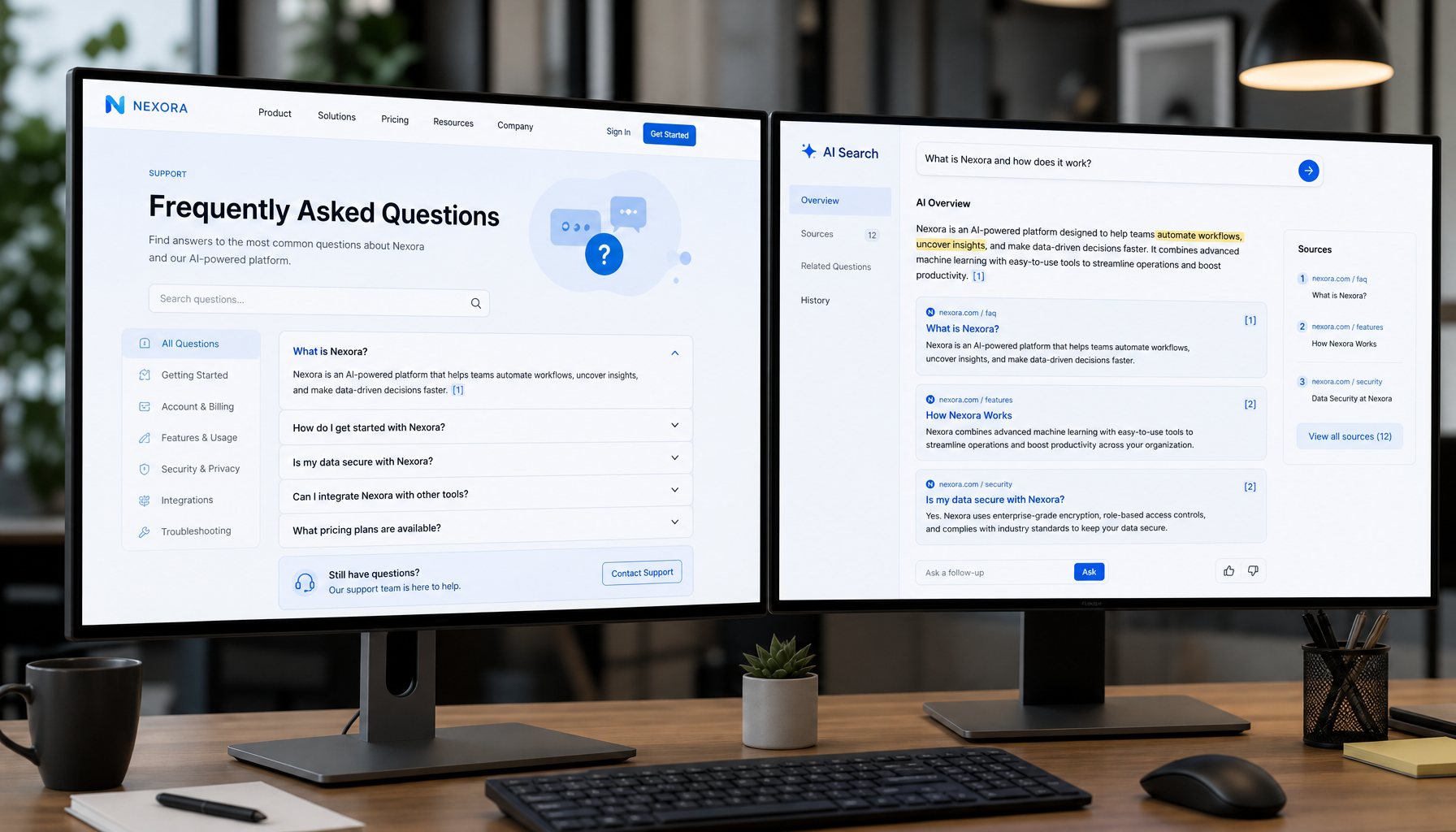
Why AI Engines Love FAQ Content
To understand why FAQ sections boost citation rates, you need to understand how AI engines process content. The retrieval pipeline for engines like Perplexity, ChatGPT, and Google AI Overview follows a common pattern: retrieve candidate documents, extract relevant passages, re-rank passages by relevance and quality, then synthesize an answer with citations.
FAQ sections align perfectly with this pipeline for three reasons:
1. Natural Query-Answer Alignment
When a user asks an AI engine a question, the engine searches for passages that directly answer that question. FAQ sections are literally structured as question-answer pairs. The question in your FAQ often matches or closely mirrors the user’s query, and the answer is a self-contained response that the engine can cite directly.
This alignment is not subtle. A user asking “how long does it take to see GEO results” will find a near-perfect match in an FAQ entry titled “How quickly can I see results from GEO optimization?” The passage extractor scores this extremely high because the semantic overlap is almost complete.
2. Self-Contained Passage Structure
AI engines extract passages, not pages. The ideal passage is a coherent, self-contained unit that answers a specific question without requiring surrounding context. FAQ answers are exactly this: each one is written to stand alone, provide a complete answer, and make sense without reading the rest of the article.
Compare this to a typical article paragraph buried in the middle of a long section. That paragraph might contain the answer, but it often depends on context from previous paragraphs, uses pronouns that reference earlier sentences, or assumes knowledge established elsewhere in the article. The FAQ answer has none of these dependencies.
3. Schema Markup Signals
FAQ schema (FAQPage structured data) explicitly tells AI engines “this is a question and this is its answer.” While AI engines can identify Q&A patterns without schema, the markup removes ambiguity and makes extraction trivially easy. It is a direct signal that says “cite this passage for this question.”
The combination of these three factors creates a compounding advantage. FAQ sections are easier to retrieve, easier to extract, easier to match to queries, and easier to cite. No other content format offers this level of alignment with the AI citation pipeline.
The Data: How Much Do FAQ Sections Actually Help?
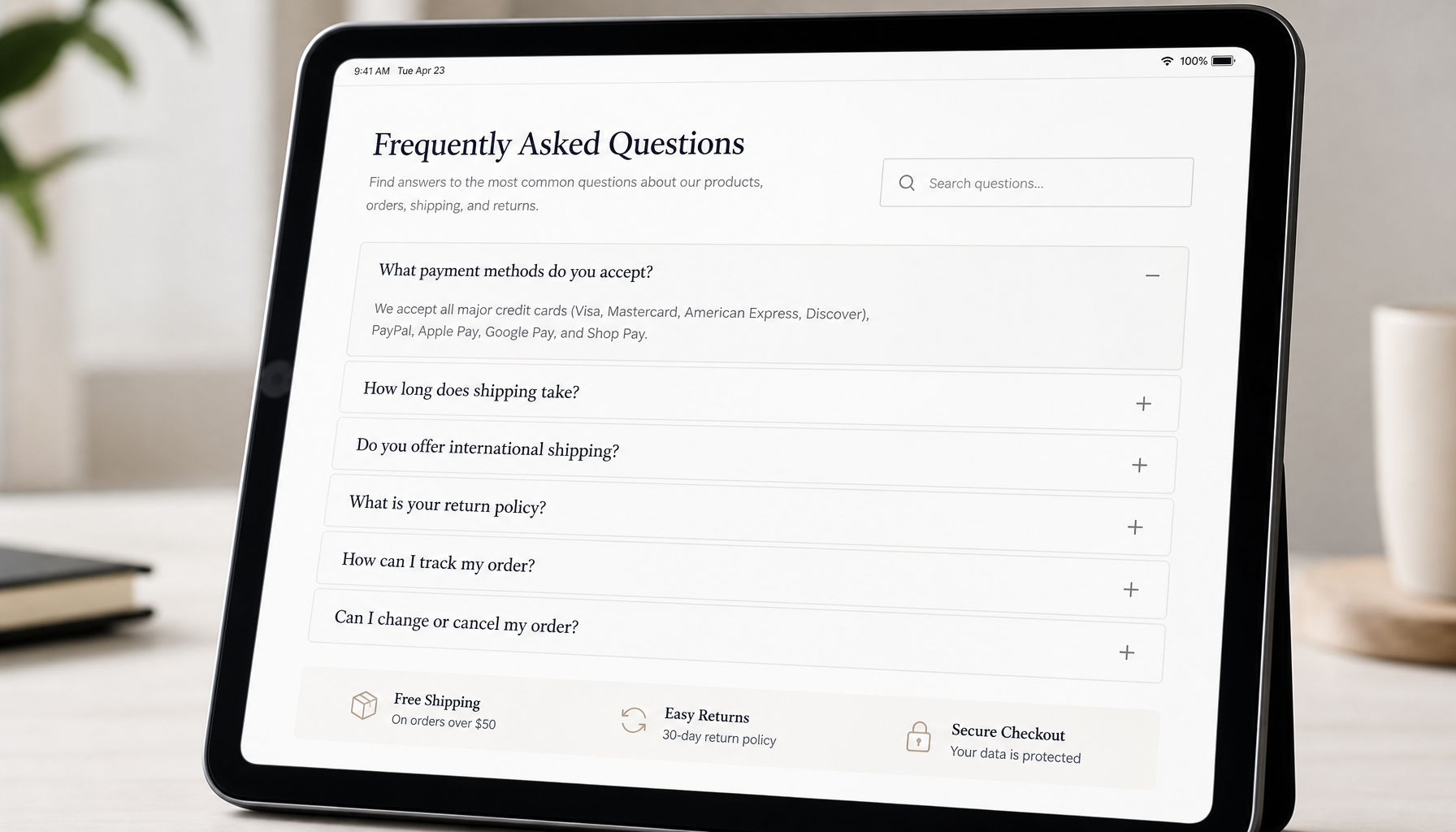
Quantifying the exact citation lift from FAQ sections is challenging because it depends on topic, competition, and implementation quality. However, consistent patterns emerge across the sites we have analyzed:
- Average citation rate increase: Sites that add well-structured FAQ sections to existing articles see a 15% to 40% increase in citation frequency for queries that match FAQ questions.
- New query coverage: FAQ sections typically surface content for 20% to 35% more unique queries than the article would reach without them, because each FAQ question creates a new entry point.
- Citation position: When FAQ content is cited, it tends to appear in the first three citations of an AI answer, suggesting high relevance scores.
- Cross-engine consistency: FAQ-driven citations tend to appear across multiple AI engines simultaneously, not just one, indicating that the structural advantage is universal rather than engine-specific.
These numbers represent averages across diverse sites and topics. Individual results vary, but the directional signal is clear and consistent: FAQ sections meaningfully improve AI citation performance.
How to Structure FAQ Sections for Maximum Citation Impact
Not all FAQ sections are created equal. A poorly structured FAQ can be ignored entirely by AI engines. Here is how to build FAQ sections that consistently earn citations.
Question Selection: Match Real User Queries
The questions in your FAQ should mirror the actual questions users ask AI engines. This means:
- Use natural language phrasing. Write questions the way a person would type them into ChatGPT or Perplexity, not the way a marketer would phrase a keyword.
- Target follow-up questions. After reading your main article, what would a reader still want to know? Those follow-up questions are exactly what users ask AI engines.
- Check AI engine suggestions. Run your topic through Perplexity and ChatGPT and note what follow-up questions they suggest or what related queries appear. These are direct signals of demand.
- Include comparison questions. “How does X compare to Y?” and “What is the difference between X and Y?” are among the most common AI query patterns.
- Cover objections and concerns. Questions like “Is X worth it?” or “What are the downsides of X?” get asked frequently and are often underserved by existing content.
Answer Structure: Concise, Complete, and Quotable

Each FAQ answer should follow these principles:
- Lead with the direct answer. The first sentence should answer the question completely. Additional context can follow, but the core answer must come first.
- Keep answers between 40 and 150 words. Too short and there is not enough substance to cite. Too long and the passage loses its self-contained quality.
- Include at least one specific fact. A number, a timeframe, a named entity, or a concrete example makes the answer more citable than a vague generalization.
- Avoid internal references. Do not write “as mentioned above” or “see the section on X.” Each answer must stand alone without context from the rest of the page.
- Use plain language. AI engines prefer answers that are accessible to a general audience. Jargon-heavy answers get cited less often unless the query itself is highly technical.
Optimal FAQ Length: How Many Questions?
Based on citation performance data, the sweet spot for FAQ sections is 4 to 8 questions per article. Fewer than 4 does not provide enough entry points to meaningfully expand query coverage. More than 8 tends to dilute quality, as teams stretch to fill the section with less relevant questions.
For pillar pages or comprehensive guides, up to 12 questions can work if every question genuinely addresses a distinct user need. For shorter articles, 3 to 5 focused questions is sufficient.
Implementing FAQ Schema Markup
FAQ schema is the technical layer that makes your FAQ sections machine-readable. Here is how to implement it correctly.
The Basic Structure
FAQ schema uses the FAQPage type with nested Question and Answer entities. The JSON-LD format is preferred by all major search engines and AI crawlers:
{
  "@context": "https://schema.org",
  "@type": "FAQPage",
  "mainEntity": [
    {
      "@type": "Question",
      "name": "How do FAQ sections improve AI citation rates?",
      "acceptedAnswer": {
        "@type": "Answer",
        "text": "FAQ sections improve AI citation rates by providing self-contained question-answer pairs that align directly with user queries. AI engines can extract and cite these passages with minimal processing because each answer is complete, specific, and semantically matched to common search patterns."
      }
    }
  ]
}
Implementation Best Practices
- Match schema to visible content. The questions and answers in your schema must exactly match what appears on the page. Discrepancies can trigger penalties or schema invalidation.
- Use JSON-LD in the head or end of body. Place the script tag in the document head or just before the closing body tag. Both positions work, but head placement is slightly preferred.
- Validate with testing tools. Run your schema through Google’s Rich Results Test and Schema.org’s validator before publishing. Invalid schema is worse than no schema because it signals poor technical quality.
- Combine with Article schema. Your page should have both Article schema (for the main content) and FAQPage schema (for the FAQ section). They complement each other and provide AI engines with a complete picture of the page structure.
- Keep answers in schema concise. While your visible FAQ answers can include formatting and links, the schema text field should contain a clean, plain-text version of the answer without HTML markup.
FAQ Placement and Design Patterns

Where to Place the FAQ Section
Placement affects both user experience and AI extraction. The most effective positions:
- End of article, before the CTA. This is the most common and effective placement. It catches users who have read the article and still have questions, and it provides AI engines with a clean, extractable section that does not interrupt the main content flow.
- After the main content but before related posts. Similar to end-of-article but ensures the FAQ is not buried below navigation elements that might confuse passage extractors.
- Dedicated FAQ page for broad topics. For products or services with many common questions, a standalone FAQ page with comprehensive schema can earn citations across dozens of queries.
Avoid placing FAQ sections in sidebars, accordions that require JavaScript interaction to reveal content, or within tabbed interfaces. AI crawlers may not execute the interactions needed to access hidden content.
Design for Both Humans and Machines
The FAQ section should be visually clear to human readers while remaining structurally clean for AI extraction:
- Use H3 tags for questions (within an H2 “Frequently Asked Questions” section)
- Use paragraph tags for answers
- Keep formatting minimal: bold for emphasis, links where genuinely helpful, but no complex layouts
- Make the section visually distinct from the main article body so users can find it easily
- Ensure all content is visible without user interaction (no collapsed accordions for critical FAQ content)
Common Mistakes That Kill FAQ Citation Performance

Many sites add FAQ sections but see no citation improvement because of implementation errors. Here are the most common mistakes:
Mistake 1: Generic, Low-Value Questions
Questions like “What is [product name]?” or “How do I contact support?” do not earn AI citations because they are either too brand-specific or too generic to match real user queries. Every question should address a genuine information need that someone would type into an AI engine.
Mistake 2: Answers That Are Too Short
One-sentence answers like “Yes, we offer a free trial” provide no substance for AI engines to cite. The answer needs enough depth to be useful as a standalone passage. Aim for at least 40 words per answer, with specific details that add value beyond a simple yes or no.
Mistake 3: Answers That Are Too Long
Conversely, answers that run 300 or more words lose their self-contained quality. They start to read like mini-articles rather than focused answers. If an answer needs that much space, it probably belongs as its own section in the main article rather than in the FAQ.
Mistake 4: Hidden Content Behind Interactions
Accordion-style FAQs that require a click to reveal the answer are problematic. While Googlebot can sometimes render JavaScript interactions, many AI crawlers cannot. If the answer text is not in the initial HTML response, it may be invisible to AI engines entirely.
Mistake 5: Schema Mismatch
If your FAQ schema contains different text than what appears on the page, or if the schema is malformed, AI engines may ignore it entirely. Always validate schema and ensure exact text matching between visible content and structured data.
Mistake 6: Ignoring Question Phrasing
Writing questions in a formal or unnatural style reduces query matching. “What are the prerequisites for implementation?” matches fewer real queries than “What do I need before I start?” Use the language your audience actually uses when asking questions.
Advanced FAQ Strategies for Higher Citation Rates

Once you have the basics right, these advanced strategies can push citation rates higher:
Strategy 1: Query Cluster FAQs
Instead of random questions, organize your FAQ around a query cluster. Identify the primary question your article answers, then map the 4 to 6 most common follow-up questions. This creates a coherent FAQ that covers the full intent journey, making your page the best single source for the entire topic.
Strategy 2: Competitive Gap FAQs
Analyze what questions AI engines currently answer poorly or with weak sources. Create FAQ entries that provide better answers to those specific questions. This is especially effective for emerging topics where existing content is thin.
Strategy 3: Data-Enriched Answers
Include specific numbers, percentages, dates, or named examples in every FAQ answer. “FAQ sections increase citation rates by 15% to 40% on average” is more citable than “FAQ sections can significantly improve citation rates.” AI engines prefer answers they can attribute with confidence.
Strategy 4: Cross-Linking FAQ Answers
When an FAQ answer relates to a topic covered in depth elsewhere on your site, include a brief answer plus a link to the detailed resource. This serves both the user (who gets a quick answer plus a path to more depth) and AI engines (which can follow the link to find additional supporting content).
Strategy 5: Regular FAQ Updates
User questions evolve as topics develop. Review and update your FAQ sections quarterly to add new questions that have emerged, update answers with current data, and remove questions that are no longer relevant. Fresh FAQ content signals active maintenance to AI engines.
Measuring FAQ Citation Impact
To know whether your FAQ optimization is working, you need to measure citation performance before and after implementation. Here is a practical measurement framework:
Before Implementation (Baseline)
- Identify 10 to 20 priority queries related to your article topic
- Run each query through Perplexity, ChatGPT, and Google AI Overview
- Record which sources are cited for each query
- Note whether your domain appears and in what position
- Calculate your baseline citation rate (citations / total queries)
After Implementation (Measurement)
- Wait 2 to 4 weeks for AI engines to re-crawl and re-index your content
- Run the same queries again across the same engines
- Also run the specific questions from your FAQ as queries
- Record citation appearances and positions
- Calculate the new citation rate and compare to baseline
Ongoing Monitoring
Use tools like the Openbyt GEO Score Analyzer to continuously evaluate your content’s AI citation readiness. The tool scores content across nine dimensions including structure, factual density, and schema implementation, giving you a clear picture of where each page stands and what to improve next.
Real-World Results: FAQ Optimization in Practice

To illustrate the impact, consider three representative scenarios from sites that implemented FAQ optimization:
Scenario 1: B2B Software Documentation
A developer tools company added 5-question FAQ sections to their top 20 documentation pages. Within three weeks, their citation rate on technical queries increased from 8% to 22%. The FAQ answers were highly specific, including version numbers, compatibility details, and concrete code examples.
Scenario 2: Health and Wellness Blog
A health content site added FAQ sections with schema to their top 50 articles. Citation rates improved from 4% to 15% over six weeks. The biggest gains came from FAQ questions that addressed common misconceptions and included specific research citations within the answers.
Scenario 3: E-commerce Product Pages
An e-commerce site added FAQ sections to product category pages addressing buying questions (sizing, compatibility, comparison). Their products began appearing in AI shopping recommendations, with citation rates going from near zero to 11% for purchase-intent queries.
In all three cases, the investment was modest: a few hours of content work per page plus schema implementation. The returns in AI visibility were disproportionately large relative to the effort.
Frequently Asked Questions
How many FAQ questions should I include per article?
The optimal range is 4 to 8 questions per article. This provides enough entry points for diverse queries without diluting quality. For comprehensive pillar pages, up to 12 questions can work if each addresses a genuinely distinct user need. For shorter articles, 3 to 5 focused questions is sufficient.
Do I need FAQ schema markup or is the visible content enough?
Both matter, but schema significantly amplifies the effect. Visible FAQ content can be cited without schema, but adding FAQPage structured data makes extraction easier and more reliable for AI engines. Sites with both visible FAQ content and valid schema consistently outperform those with only one or the other.
Can FAQ sections hurt my traditional SEO performance?
No, when implemented correctly. FAQ sections with schema can earn featured snippets in traditional search, which improves SEO performance. The only risk is if FAQ content is thin or duplicative, which could dilute page quality signals. Well-written, substantive FAQ sections benefit both SEO and GEO.
How often should I update my FAQ sections?
Review FAQ sections quarterly at minimum. Update answers when data changes, add new questions that have emerged in your topic area, and remove questions that are no longer relevant. Updating the dateModified in your Article schema when you refresh FAQ content helps AI engines recognize the update.
Should FAQ answers link to other pages on my site?
Yes, when genuinely helpful. A brief FAQ answer plus a link to a detailed resource serves both users and AI engines. The link helps AI engines discover related content on your site, potentially increasing citations across multiple pages. Keep the answer self-contained enough to be useful without clicking the link.
Start Optimizing Your FAQ Sections Today
FAQ sections represent one of the fastest paths to improved AI citation rates. The implementation is straightforward, the results are measurable after recrawling, with timing varying by engine and site authority, and the effort compounds across every page you optimize. Unlike many GEO tactics that require deep technical changes or long-term authority building, FAQ optimization delivers quick wins that build momentum.
To assess how your current content scores across all nine dimensions of AI citation readiness, including FAQ structure and schema implementation, run your pages through the Openbyt GEO Score Analyzer. The free tier gives you three analyses per day, enough to evaluate your highest-priority pages and identify the biggest opportunities.
For teams scaling FAQ optimization across large content libraries, our Pro plan at $19/month provides 50 prompts / keywords, and the Pro plan at $49/month offers Pro monitoring capacity plus API access for integration into your content workflow.
The evidence is clear: FAQ sections boost AI citation rates meaningfully and consistently. The only question is whether you implement them before or after your competitors do. Start with your top five pages, measure the baseline, add optimized FAQ sections with schema, and track the improvement. The data will speak for itself.
For more strategies on optimizing for AI search engines, explore the Openbyt blog.
Try the Free GEO Score Analyzer
See how your content performs against 9 dimensions that AI engines evaluate when selecting sources to cite. The Openbyt GEO Score Analyzer is free to use, with three analyses per day on the free tier.
Need more analyses or API access? Check our pricing or browse more GEO guides on the blog.