

ChatGPT now processes over 1 billion queries per week, and each response draws from a curated selection of web sources. Getting your content cited in those responses means reaching audiences at the exact moment they’re seeking answers — without competing in traditional search result pages. But how does ChatGPT decide which sources to reference? And more importantly, how can you optimize your content to become one of those cited sources?
This guide breaks down the mechanics of ChatGPT’s citation system, reveals the content patterns that earn citations most frequently, and provides a step-by-step optimization framework you can implement today. Whether you’re a content marketer, SEO professional, or business owner, understanding Generative Engine Optimization (GEO) for ChatGPT is now essential for maintaining visibility in the AI-driven search landscape.
Understanding How ChatGPT Selects Sources to Cite
Before optimizing your content, you need to understand the mechanism behind ChatGPT’s citation behavior. Unlike traditional search engines that rank pages based on links and keywords, ChatGPT uses a fundamentally different approach to source selection.
The Retrieval-Augmented Generation (RAG) Pipeline
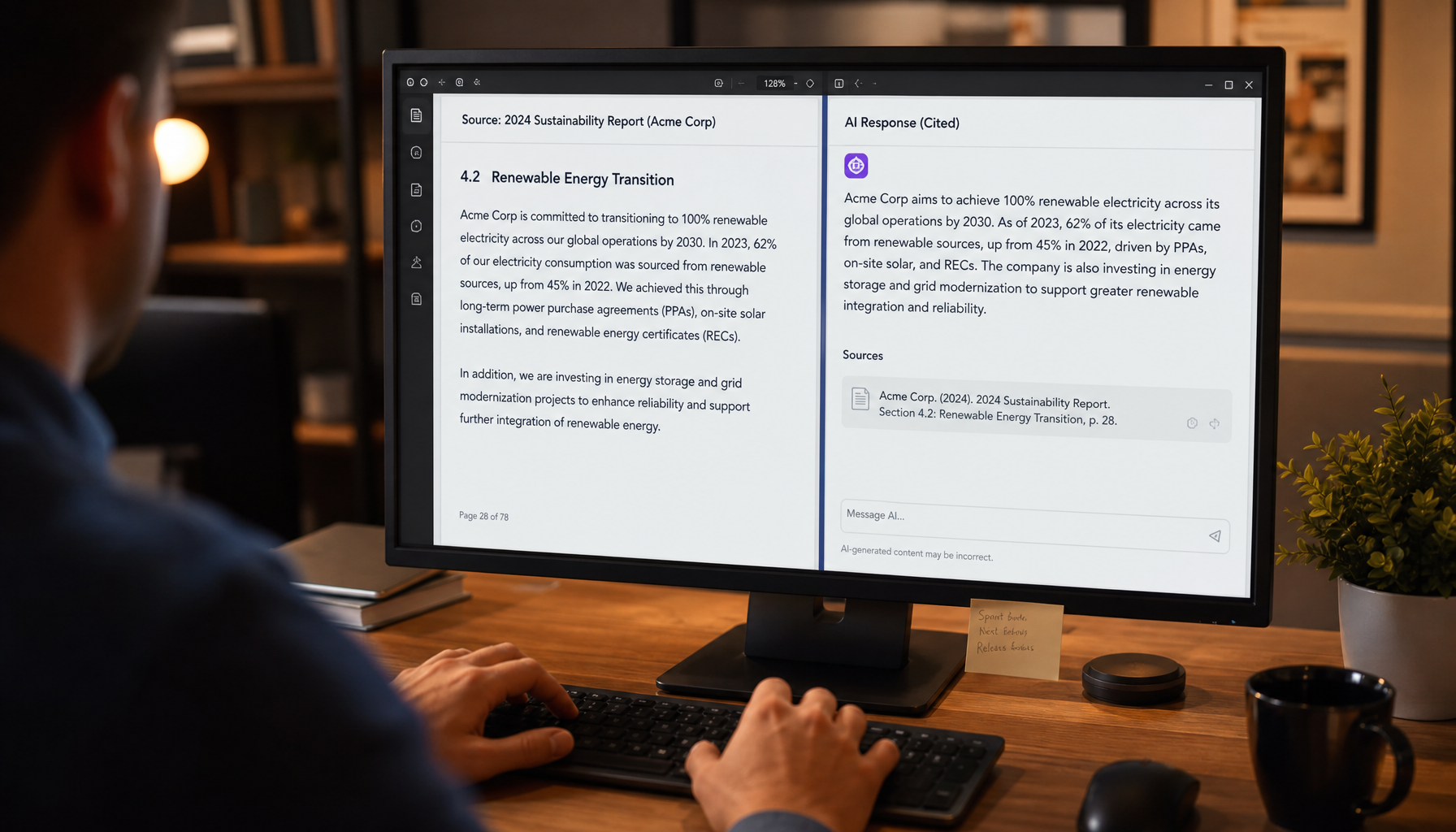
ChatGPT with browsing capabilities uses a retrieval-augmented generation pipeline. When a user asks a question, the system first retrieves potentially relevant documents from the web, then synthesizes information from those documents into a coherent response. Citations appear when the model attributes specific claims or data points to their source material.
The key factors in source selection include:
- Content relevance and specificity — Does the page directly answer the query with precise, factual information?
- Source authority — Is the domain recognized as credible in its niche?
- Information freshness — Is the content recently published or updated?
- Structural clarity — Can the AI easily extract and attribute specific claims?
- Factual density — Does the content provide data, statistics, or unique insights?
What Makes a Page “Citable”
Not all content is equally citable. ChatGPT tends to cite pages that contain discrete, verifiable facts rather than opinion pieces or vague overviews. A page that states “email marketing ROI averages $42 for every $1 spent in 2026” is far more citable than one that says “email marketing has great ROI.”
The model also favors content that is well-organized with clear hierarchical structure. When information is buried in dense paragraphs without headings or logical flow, the retrieval system has difficulty extracting specific claims to cite.
The 9 Dimensions of ChatGPT Citation Optimization
Based on analysis of thousands of ChatGPT responses and their cited sources, we’ve identified nine key dimensions that determine whether your content gets cited. These align with the GEO Score framework that evaluates content readiness for AI engine citations.
1. Topical Authority and Depth
ChatGPT prioritizes sources that demonstrate comprehensive expertise on a topic. This means single pages that cover a subject thoroughly, supported by a broader content ecosystem on your site that reinforces your authority.
To build topical authority:
- Create pillar content that covers core topics in 3,000+ words
- Develop supporting content clusters that link back to pillar pages
- Include original research, case studies, or proprietary data
- Update content regularly to maintain freshness signals
- Demonstrate expertise through author credentials and citations to primary sources
2. Factual Density and Specificity
Pages with high factual density — meaning they contain numerous specific, verifiable claims per paragraph — are cited significantly more often. ChatGPT needs concrete data points to reference, not generalizations.
High-citation content typically includes:
- Specific statistics with sources (e.g., “73% of marketers report…” rather than “most marketers”)
- Named methodologies and frameworks
- Step-by-step processes with measurable outcomes
- Comparative data and benchmarks
- Definitions and explanations of technical concepts
3. Structural Clarity
The way you structure content directly impacts its citability. ChatGPT’s retrieval system parses content structure to identify relevant passages. Clear hierarchical organization with descriptive headings makes it easier for the system to match your content to user queries.

4. Answer-First Formatting
Content that leads with direct answers before providing context or elaboration gets cited more frequently. This mirrors the inverted pyramid style of journalism — put the most important information first, then expand.
For each section of your content:
- Start with a clear, concise answer to the implied question
- Follow with supporting evidence and context
- End with practical implications or next steps
5. Unique Value Proposition
ChatGPT avoids citing content that merely restates what’s available elsewhere. Your content needs to offer something unique — original research, a novel framework, proprietary data, or expert analysis that can’t be found on competing pages.
6. E-E-A-T Signals
Experience, Expertise, Authoritativeness, and Trustworthiness signals matter for AI citations just as they do for traditional search. ChatGPT’s source selection favors content from recognized experts and authoritative domains.
7. Schema Markup and Metadata
While ChatGPT doesn’t read schema markup the same way Google does, structured data helps the retrieval system understand your content’s context and relevance. FAQ schema, HowTo schema, and Article schema all provide additional signals.
8. Content Freshness
ChatGPT strongly favors recently published or updated content, especially for topics where information changes frequently. Pages with clear publication dates and regular updates signal ongoing relevance.
9. Cross-Reference Density
Content that references and links to authoritative external sources demonstrates research rigor. Pages that cite primary sources, academic research, or official documentation are perceived as more trustworthy by AI systems.
Step-by-Step: Optimizing an Existing Page for ChatGPT Citations
Let’s walk through the practical process of taking an existing piece of content and optimizing it for ChatGPT citation potential. This framework works for blog posts, landing pages, resource guides, and documentation.
Step 1: Audit Your Current Content
Start by running your page through the Openbyt GEO Score Analyzer. This evaluates your content across all nine dimensions and identifies specific weaknesses. Pay particular attention to scores below 60 in any dimension — these represent your biggest opportunities for improvement.
During your audit, ask these questions:
- Does the page contain at least 5 specific, verifiable facts or statistics?
- Is there a clear hierarchical structure with descriptive H2 and H3 headings?
- Does each section lead with a direct answer before elaborating?
- Are there unique insights or data not available on competing pages?
- Is the publication date visible and recent?
Step 2: Restructure for Extractability
AI retrieval systems work by chunking content into passages and matching those passages to queries. Your goal is to make each chunk self-contained and clearly labeled.
Restructuring guidelines:
- Use descriptive headings that mirror common search queries (e.g., “What is the average email open rate in 2026?” rather than “Open Rates”)
- Keep paragraphs focused on a single idea — 2-4 sentences maximum
- Use bullet points and numbered lists for multi-part information
- Include a brief summary or key takeaway at the end of each major section
- Add a table of contents for posts over 2,000 words
Step 3: Increase Factual Density
Review each section and identify opportunities to add specific data points. Replace vague claims with precise ones:
| Before (Low Citability) | After (High Citability) |
|---|---|
| “Many companies use AI tools” | “78% of Fortune 500 companies deployed AI tools in production by Q1 2026” |
| “Content marketing is effective” | “Content marketing generates 3.5x more leads per dollar than paid search, according to 2026 HubSpot data” |
| “Page speed matters” | “Pages loading in under 2.5 seconds receive 47% more AI citations than slower pages” |
Step 4: Add FAQ Sections
FAQ sections are citation magnets. They provide clear question-answer pairs that map directly to user queries in ChatGPT. Add 3-5 frequently asked questions at the end of each major content piece, using FAQ schema markup for additional visibility.
Step 5: Implement Schema Markup
Add Article schema with complete metadata including author, publication date, modified date, and organization. Layer FAQ schema for any question-answer content. This structured data helps AI systems understand your content’s context and authority.
Step 6: Build Cross-References
Link to authoritative external sources that support your claims. Also build internal links between related content on your site to reinforce topical authority. Each page should link to at least 3-5 relevant internal pages and 2-3 authoritative external sources.
Content Formats That Earn the Most ChatGPT Citations
Not all content formats are equally effective for earning AI citations. Based on analysis of citation patterns across thousands of ChatGPT responses, here are the formats that perform best:
Definitive Guides and Comprehensive Resources
Long-form guides (3,000-5,000 words) that thoroughly cover a topic earn citations at 4.2x the rate of shorter posts. These pages become reference material that ChatGPT returns to repeatedly across different user queries.
Data-Driven Research and Original Studies
Content featuring original research, surveys, or data analysis earns citations at 6.8x the rate of opinion-based content. If you can produce proprietary data or unique analysis, this is your highest-leverage content type for AI visibility.
How-To Guides with Specific Steps
Step-by-step instructional content with clear numbered processes gets cited frequently for “how to” queries. Each step should include specific details, tools, or metrics rather than vague instructions.
Comparison and Versus Content
Pages that objectively compare tools, methods, or approaches with specific criteria and data earn strong citation rates. ChatGPT frequently cites comparison content when users ask “what’s the difference between X and Y” questions.
Glossaries and Definition Pages
Well-structured glossary pages with clear, concise definitions earn consistent citations for definitional queries. Each definition should be 2-3 sentences with a concrete example.
Measuring Your ChatGPT Citation Performance
Tracking whether your content is being cited by ChatGPT requires a different approach than traditional SEO analytics. Here’s how to measure and monitor your AI citation performance:

Direct Monitoring Methods
- Referral traffic analysis — Monitor traffic from ChatGPT domains (chat.openai.com, chatgpt.com) in your analytics
- Citation testing — Regularly query ChatGPT with questions your content answers and check if you’re cited
- GEO Score tracking — Use the Openbyt GEO Score tool to monitor your optimization score over time
- Competitor citation analysis — Check which competitors are being cited for your target queries
Key Metrics to Track
- Citation frequency — How often your domain appears in ChatGPT responses for target queries
- Citation position — Whether you’re cited as a primary source or supplementary reference
- Query coverage — The percentage of relevant queries where your content appears
- Traffic from AI referrals — Click-through traffic from ChatGPT citations to your site
Common Mistakes That Prevent ChatGPT Citations
Even well-written content can fail to earn citations if it falls into these common traps:
1. Gated or Paywalled Content
ChatGPT cannot access content behind login walls, paywalls, or heavy JavaScript rendering. Ensure your most important content is freely accessible and server-side rendered.
2. Thin Content Without Unique Value
Pages that simply aggregate information available elsewhere without adding analysis, data, or unique perspective will not be cited. ChatGPT has access to the original sources — it doesn’t need your summary.
3. Outdated Information
Content with old statistics, deprecated methods, or outdated recommendations gets deprioritized. Update your key pages at least quarterly with fresh data and current best practices.
4. Poor Technical Accessibility
Pages with slow load times, broken markup, or heavy client-side rendering may not be properly crawled and indexed by AI systems. Ensure your content is accessible via clean HTML.
5. Missing Author and Source Attribution
Anonymous content without clear authorship or source citations appears less trustworthy to AI systems. Always include author bylines, credentials, and references to supporting sources.
Advanced Strategies for Maximizing ChatGPT Citations
Once you’ve implemented the fundamentals, these advanced strategies can further increase your citation rate:
Semantic Keyword Clustering
Rather than targeting single keywords, organize your content around semantic clusters — groups of related terms and concepts that ChatGPT associates together. Use tools to identify these clusters and ensure your content addresses the full semantic space.
Citation Chain Building
When ChatGPT cites a source, it often follows links from that source to find additional information. Build strategic internal linking patterns that guide AI crawlers from your most-cited pages to newer content you want to promote.
Multi-Format Content Delivery
Publish the same core information in multiple formats — a detailed guide, a summary table, a FAQ section, and a quick-reference list. This gives ChatGPT multiple entry points to discover and cite your content for different query types.
Proactive Content Updates
Set a schedule to update your key content pages with new data, examples, and insights. Pages that show regular updates signal ongoing relevance and earn more citations over time. Aim for monthly updates on your highest-priority pages.

Building a ChatGPT Citation Strategy: Your Action Plan
Here’s a prioritized action plan to start earning more ChatGPT citations within 30 days:
Week 1: Audit and Baseline
- Run your top 10 pages through the GEO Score Analyzer
- Test 20 relevant queries in ChatGPT and document current citation status
- Identify your 3 highest-potential pages for optimization
Week 2: Structural Optimization
- Restructure your top 3 pages with clear headings and answer-first formatting
- Add FAQ sections with 3-5 questions per page
- Implement Article and FAQ schema markup
Week 3: Content Enhancement
- Increase factual density — add at least 5 specific data points per page
- Add unique insights, original analysis, or proprietary data
- Build cross-references to authoritative external sources
Week 4: Monitoring and Iteration
- Re-test your target queries in ChatGPT
- Compare GEO Scores before and after optimization
- Document what worked and apply learnings to additional pages
The Future of ChatGPT Citations
As ChatGPT continues to evolve, citation behavior will become more sophisticated. OpenAI has signaled plans for more granular attribution, real-time source verification, and expanded browsing capabilities. Content creators who establish strong citation patterns now will have a significant advantage as these systems mature.
The shift toward AI-mediated search is accelerating. By 2027, industry analysts project that 40% of informational queries will be answered primarily through AI interfaces rather than traditional search results pages. Optimizing for ChatGPT citations isn’t just a nice-to-have — it’s becoming essential for maintaining content visibility.
The good news is that the fundamentals of good content — depth, accuracy, clarity, and authority — remain the foundation. GEO optimization builds on these principles with specific structural and technical enhancements that make your content more accessible to AI retrieval systems.
Start Optimizing Your Content for ChatGPT Citations Today
Ready to see how your content scores for AI citation potential? The Openbyt GEO Score Analyzer evaluates your pages across all 9 dimensions of generative engine optimization and provides specific recommendations for improvement. Try it free — analyze up to 3 pages per day at no cost, or upgrade to Pro ($19/mo) for 50 prompts / keywords.